Your Family and CDKL5 Deficiency Disorder (CDD)
Receiving a CDKL5 deficiency disorder (CDD) diagnosis can bring a mix of emotions. Many families describe the time leading up to a diagnosis as one of uncertainty. You may have noticed early signs that something wasn't quite right, navigated countless questions and appointments, and worked with multiple healthcare providers before finally receiving a CDD diagnosis for your loved one.
For some families, there may be relief in finally having answers. For others, there may be new concerns about what comes next. However you're feeling, know that you're not alone.
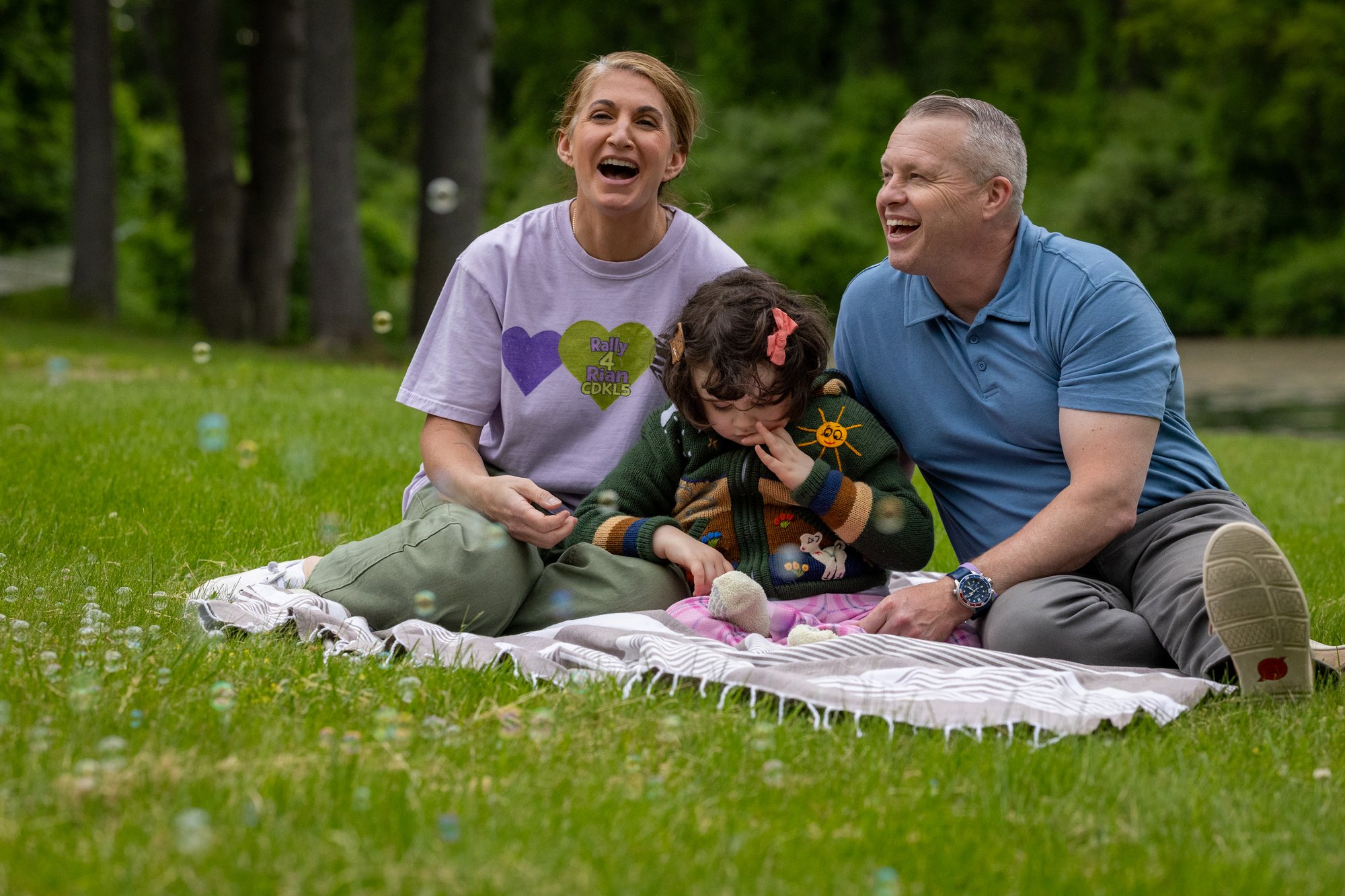



Rian, 8, with her mom and dad


What Is CDKL5 Deficiency Disorder (CDD)?
CDKL5 deficiency disorder (CDD) is a rare genetic condition caused by changes in the CDKL5 gene, which plays an important role in brain development and function.
People with CDD experience seizures, often beginning in early infancy, along with developmental challenges that can affect learning, movement, communication, vision, and daily life. Symptoms and abilities can vary widely, and the impact of CDD looks different for every person.
CDD is estimated to affect approximately 1 in 40,000 to 60,000 live births. While a diagnosis can feel overwhelming, there is a growing community of families, healthcare professionals, and advocates working to better understand CDD and support those living with it.
Get helpful guides from the International Foundation for CDKL5 Research (IFCR) for navigating a new diagnosis.

"The whole game changed for me to have the name of the diagnosis. As a mom, it meant everything to me."
—Kim, Lily's mom
What CDKL5 Deficiency Disorder (CDD) Can Affect Over Time

CDKL5 deficiency disorder (CDD) can affect many aspects of development and daily life. As your loved one grows, you may encounter new questions, care considerations, and milestones along the way.
Common areas impacted by CDD may include:
- Seizures, which often begin early in life and may change over time
- Learning and development, including cognitive and developmental delays
- Movement and motor skills, such as muscle tone, coordination, and mobility
- Communication, including speech and other ways of expressing needs and emotions
- Vision and visual processing
- Feeding, digestion, sleep, and other aspects of overall health
You Don't Have to Navigate CDKL5 Deficiency Disorder (CDD) Alone

Support from others can make a meaningful difference. Connecting with others who understand the realities of life with CDKL5 deficiency disorder (CDD) can provide encouragement, practical insights, and a sense of community.
Connect with others on the CDKL5 deficiency disorder (CDD) journey through IFCR's Family Support Representative (FSR) program. FSRs understand what it’s like to live with CDD and can offer encouragement, guidance, and support.
CDKL5 Centers of Excellence bring together multidisciplinary teams with experience caring for individuals with CDKL5 deficiency disorder (CDD).
Learn more about the specialists who may be involved in your loved one's care and how to advocate for their needs over time.


Sign up for emails to get updates as more content, resources, and stories become available
