Supporting Caregivers and Siblings
No family should have to navigate CDKL5 deficiency disorder (CDD) alone. Sign up for support and resources, including our C.A.R.E. (Caring for Adults with Rare Epilepsy) Binder, to navigate the journey from pediatric to adult care.
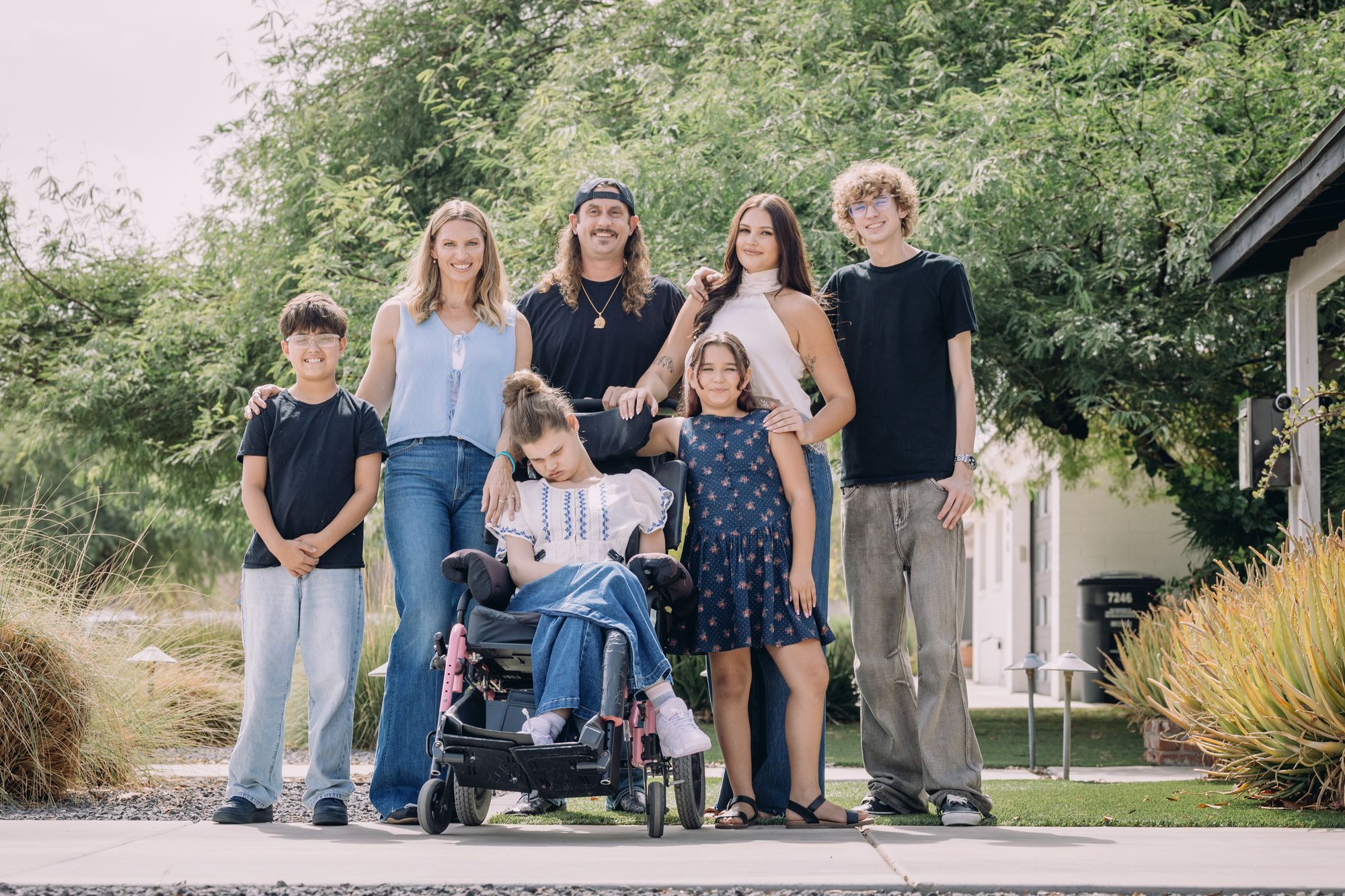



Lily, 24, with her family



Caregiver Support
As a caregiver, it's easy to put your own needs and relationships aside while caring for others. It's common to feel like you're balancing many roles at once: caregiver, advocate, coordinator, and parent. Remember that taking care of yourself is an important part of taking care of your loved one. Whether you're feeling overwhelmed, stressed, or simply in need of connection, support is available.
Some advice shared by other caregivers:
- Check in with yourself and make time for self-care
- Ask for help when you need it
- Find your community and connect with others who understand
- Take life one day at a time
- Connect with Family Support Representatives from the International Foundation for CDKL5 Research

“Community can help you carry very heavy things. So don’t take it all on yourself.”
—Kim, Lily’s mom

52%-76%
of siblings who felt knowledgeable about their sibling's developmental and epileptic encephalopathy (DEE) reported lower anxiety and fewer depressed mood symptoms

38%-86%
of siblings who felt knowledgeable about their sibling's DEE reported feeling more comfortable talking with others about it

42%
of siblings ages 9 to 12 years reported high levels of sadness, but only 20% of parents recognized those feelings



Sibling Support
The experience of having a sibling with CDKL5 deficiency disorder (CDD) can be difficult at times. While siblings often show incredible strength and compassion, they may also have questions, worries, or emotions that are harder to see.
Keeping siblings informed, encouraging open conversations, and setting aside one-on-one time can help them feel supported and connected.
Some ideas from other families:
- Talk openly and encourage questions
- Create opportunities for one-on-one time together
- Recognize and celebrate the contributions that siblings make
- Consider additional support, such as counseling or therapy, when needed
Sibling Support Kits
Explore resources designed to help siblings better understand CDKL5 deficiency disorder (CDD) and navigate their unique role within the family.
“Lily has really shaped me as who I am. I have a lot of perspective. I see the world in a completely different light.”
—Andi, Lily’s sister

Learn about experiences from caregivers and loved ones who understand life with CDKL5 deficiency disorder (CDD)
Explore Resources
Sign up for emails to get updates as more content, resources, and stories become available
Sign Up for Updates Now